

How to measure the diameter of a bowl?
May 30, 2025
Leave a message
Hey there! I'm a bowl supplier, and I often get asked how to measure the diameter of a bowl. It might seem like a no - brainer, but there are actually a few things to keep in mind. In this blog, I'll walk you through different ways to measure a bowl's diameter and why it matters.
Why Measuring the Bowl Diameter is Important
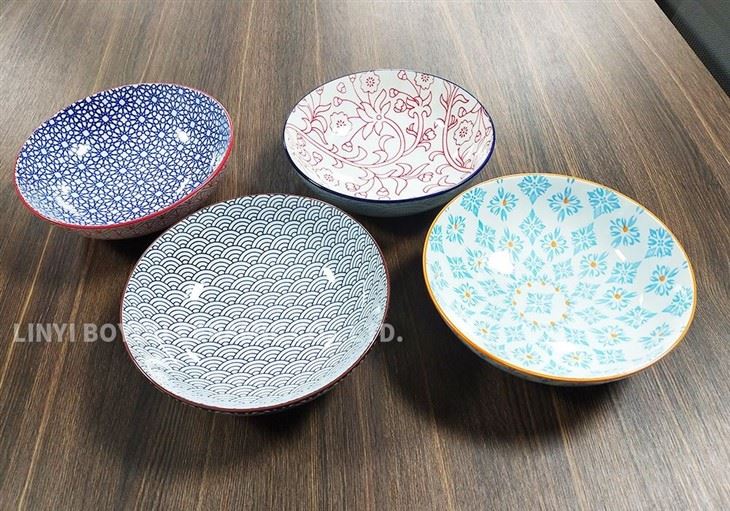
First off, why should you even bother measuring the bowl's diameter? Well, if you're a consumer, it helps you figure out if the bowl will fit on your table, in your cabinet, or if it can hold the amount of food or liquid you need. For me as a supplier, accurate measuring ensures that I'm providing the right information to my customers. When I list a Ceramic Bowl 1 or a Porcelain Embossed Bowl on my website, I need to specify the correct dimensions so that customers know exactly what they're getting.
Tools You'll Need
Before you start measuring, you'll need the right tools. The most common and easiest one is a ruler. A standard 12 - inch ruler is great for smaller bowls. If you're dealing with larger bowls, you might want to use a tape measure. It can bend around the edges of the bowl more easily and is available in longer lengths. Another option is calipers. These are more precise and can be handy if you need a really accurate measurement, especially in a manufacturing or quality - control setting.
Measuring a Bowl with a Ruler
Here's how you can measure a bowl using a ruler:
- Place the bowl on a flat surface. Make sure it's stable and not wobbly.
- Take your ruler and position it across the widest part of the bowl's opening. This is usually the top - most part of the bowl.
- Make sure the ruler is straight and centered. You don't want it tilted at an angle, or you'll get an incorrect measurement.
- Read the measurement where the edge of the bowl lines up with the ruler. Note down the measurement in inches or centimeters, depending on your preference.
This method is pretty straightforward for bowls with a round opening. But what if your bowl has an oval or irregular shape?
Measuring Non - Round Bowls
If your bowl isn't perfectly round, things get a little trickier. For an oval bowl, you'll need to measure both the major axis (the longest diameter) and the minor axis (the shortest diameter). Use the same process as with a round bowl. Place your ruler or tape measure across the widest and then the narrowest parts of the oval opening.
For irregular - shaped bowls, you can still try to find the approximate widest distance. It might not be as precise as a round or oval bowl, but it'll give you a good idea of the bowl's size. You can also use a piece of string. Wrap the string around the widest part of the bowl, mark the point where the string meets itself, and then measure the length of the string with a ruler. Divide this length by π (pi, approximately 3.14) to get the approximate diameter.
Measuring with a Tape Measure
Measuring with a tape measure follows a similar process to using a ruler:
- Set the bowl on a flat surface.
- Take your tape measure and extend it across the top of the bowl. You can wrap it around the curve of the bowl if it has a smooth edge.
- Pull the tape measure taut so that it's straight across the opening.
- Read the measurement at the point where the tape crosses the opposite edge of the bowl.
Tape measures are especially useful for larger bowls since they can bend easily and cover more distance.
Measuring with Calipers
Calipers are a bit more technical but offer a high level of accuracy. Here's how to use them:
- Open the calipers wide enough to fit around the bowl.
- Carefully place the jaws of the calipers on the inside or outside edges of the bowl's opening, depending on what kind of measurement you need.
- Close the calipers until they gently touch the edges of the bowl. Make sure they're perpendicular to the surface of the bowl.
- Read the measurement on the caliper's scale. Digital calipers will display the measurement on a screen, which is very convenient.
Calipers are often used in the manufacturing process to ensure that bowl dimensions meet specific standards. As a supplier, I use calipers to check the quality of the bowls I'm sourcing to make sure they match the specifications.
Measuring the Inside Diameter vs. Outside Diameter
When you're measuring a bowl, you might need to know both the inside diameter and the outside diameter. The inside diameter is the measurement across the opening from one inner edge to the other. This is important if you're concerned about how much food or liquid the bowl can hold. The outside diameter, on the other hand, is useful if you're worried about how the bowl will fit in a cabinet or on a tray.
To measure the inside diameter, place your measuring tool inside the bowl and follow the same steps as for the outside diameter. Just make sure you're measuring from the inner edges.
Applications of Knowing the Bowl Diameter
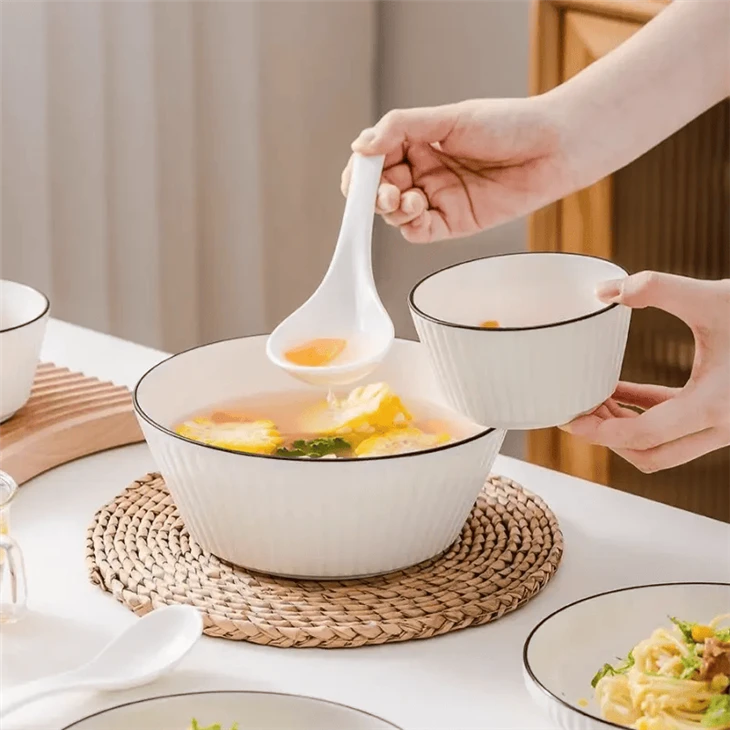
As a bowl supplier, I understand the importance of the diameter in various applications. For example, when customers are looking for a Soup Bowl Set for Kitchen, they need to know the diameter to see if it can hold an appropriate serving of soup. Chefs in restaurants also need to know the bowl dimensions for plating. A large - diameter bowl might be used to showcase a visually appealing dish, while a smaller - diameter bowl could be better for individual appetizers.
Conclusion
Measuring the diameter of a bowl is a simple yet important task. Whether you're a consumer trying to find the right bowl for your kitchen or a supplier like me ensuring the quality of the products, having the correct measurement is crucial. Remember to use the right tools, measure carefully, and note down the inside and outside diameters if necessary.
If you're interested in purchasing high - quality bowls, I'd love to talk to you. Whether you're looking for ceramic bowls, porcelain bowls, or a soup bowl set, I have a wide range of options available. Don't hesitate to reach out for more information or to discuss your specific requirements. I'm here to help you find the perfect bowls for your needs.
References
- Basic principles of measurement from general engineering textbooks
- Industry standards for bowl manufacturing and quality control