


Why Choose us
Linyi Boyou Ceramics Co., Ltd. was established in 2017 and has gone through seven years. It is based in Luozhuang, Linyi, China, a famous ceramic production base, and has expanded from an initial team of 2 people to a team of 30 people now. We specialize in producing Ceramic Coffee Bowl with Lid, Gold Line Bowl Set, Noodle Bowl Deep, New Bone China Bowl, Porcelain Soup Bowl, Ceramic Decal Bowl, Ceramic Embossed Bowl, Marb Bowl with Gold Rim, and other Bowl.
Products Sell Well
Our company's products are widely exported to countries in Europe, Africa, the Middle East, Southeast Asia and South America, and have been widely praised.
Real Factory
We have 9000 square meters' modern standard plants, two mechanical production line, more than 600 staffs, our daily output reaches 160 thousand, and our production value could sum up to 120 million annually.
OEM & ODM Available
We support the customized logo, size, color, according to your requirements.
Rich Experience
Our manufacturing techniques, including freehand line, decal, pad printing, glazing, embossing process are quite mature.


What is Ceramic Dinnerware
Ceramic is a dish made from clay, shaped, hardened by heat, and sometimes mixed with other materials and water. Products made from ceramic are overall durable but will chip easier. Ceramic and porcelain are the most durable dinnerware materials that leave many of us undecided about which one to choose. Both have their own features, usages, pros and cons to help you choose as per your requirement. If you want to know the specifications and prices of Ceramic Dinnerware, please contact us!
Superior Craftsmanship
Ceramic tableware is known for its exceptional craftsmanship, resulting in exquisite pieces that are true works of art. Skilled artisans meticulously shape and mold clay, transforming it into stunning plates, bowls, mugs, and more. The craftsmanship in creating ceramic tableware ensures that each piece is unique, with its own character and charm. Whether you prefer sleek and minimalist designs or intricate patterns and textures, ceramic tableware offers a wide range of options to suit your style and aesthetic preferences.
Durability
One of the significant advantages of ceramic tableware is its durability. Ceramic tableware can last for generations, making it a worthwhile investment when adequately cared for. Unlike other materials that may chip, stain, or fade over time, ceramic tableware maintains its beauty and functionality even with regular use. The fired glaze on ceramic tableware acts as a protective layer, enhancing its resistance to scratches and ensuring longevity. You can enjoy ceramic tableware's elegance and practicality for years.
Versatility
Ceramic tableware is highly versatile, making it suitable for various occasions. Whether hosting a formal dinner party, enjoying a casual brunch with friends, or simply having a family meal, ceramic tableware adapts effortlessly to different settings. Its timeless appeal adds an extra touch of sophistication to any dining experience. From everyday meals to special celebrations, ceramic tableware elevates the ambiance. It creates a sense of occasion, making every moment memorable.
Heat Retention
Ceramic tableware has excellent heat retention properties, which is particularly beneficial when serving hot dishes. The natural composition of ceramic helps retain heat, allowing your food to stay warm for a longer time on the table. This feature is handy when serving soups, stews, or any dish that requires extended periods of heat preservation. By using ceramic tableware, you can ensure that your culinary creations are enjoyed at their optimal temperature, enhancing the dining experience for your guests.
Safe and Non-Toxic
Safety is a paramount concern regarding tableware and ceramic excels. Ceramic tableware is free from harmful chemicals like lead and cadmium, ensuring your food remains safe and uncontaminated. Unlike some plastic or melamine alternatives, ceramic does not leach any toxic substances into your food, providing peace of mind. By opting for ceramic tableware, you prioritize the well-being of your loved ones and promote a healthier lifestyle.
Eco-Friendly Choice
In an era of increasing environmental awareness, choosing eco-friendly products is crucial. Ceramic tableware is an eco-conscious choice made from natural materials such as clay, water, and minerals. The production process of ceramic tableware has a lower carbon footprint than other materials like plastic or glass.
Additionally, ceramic tableware is biodegradable and does not contribute to plastic waste that harms our planet. By using ceramic tableware, you contribute to a more sustainable future and reduce your ecological impact.
Easy to Clean
Ceramic tableware is known for its ease of cleaning. The smooth, non-porous surface of ceramic makes it resistant to staining and odor retention. Whether you're dealing with stubborn food residue or sticky sauces, a simple rinse or a gentle scrub is usually all it takes to restore your ceramic tableware to its pristine condition.
The hygienic properties of ceramic also ensure that bacteria and germs have a more challenging time clinging to its surface, promoting a cleaner and safer dining experience.
Temperature Resistance
Another advantage of ceramic tableware is its remarkable temperature resistance. Ceramics can withstand various temperatures, making them suitable for various cooking and serving methods.
You can safely use ceramic tableware in the oven, microwave, or freezer without damaging or cracking it. This versatility allows you to seamlessly transition from food preparation to serving, keeping your dishes fresh and delicious.
Enhancing Food Presentation
Ceramic tableware adds a touch of artistry to your dining table. With its beautiful designs, colors, and textures, ceramic tableware enhances the presentation of your culinary creations. Whether you're serving a gourmet meal or a simple family dinner, the elegance of ceramic elevates the visual appeal of your dishes, making them even more enticing. The artistry of ceramic tableware makes every meal feel like a special occasion.
Unique and Handcrafted
Ceramic tableware often represents the work of skilled artisans who pour their creativity and passion into each piece. By choosing ceramic tableware, you support local artisans and craftsmen, preserving traditional techniques and promoting their livelihoods.
Types of Ceramic Dinnerware

Earthenware
Earthenware is generally the most affordable option for ceramic dinnerware types. It's made from normal clay and is fired at relatively low temperatures-between 1000℃ and 1150℃.
The best dinnerware material is hard, brittle, and slightly porous, so it cannot be used to contain liquids unless treated. Typically, this involves glazing or going through a second round of firing in the kiln to eliminate its remaining porosity. However, once it's been through this process, most earthenware pieces become dishwasher and microwave safe.
Aesthetically, these dishes bring a rustic feeling to your table: they're thick, heavy, usually brown or red, and have hand-painted designs since their porosity levels require them to be glazed. But it's important to remember that these pieces are also prone to chipping. So, if you live in a household with kids and pets, they may not be a wise investment outside of their affordability.
Stoneware
Stoneware is a step up in price and durability compared to earthenware. It's made from clay which is fired at 1200℃, achieving a partially vitrified product that results in a more durable, denser dish that's stone-like in appearance and texture.
Because it's partially vitrified, stoneware has a better porosity level than earthenware and doesn't require glazing in order to be appropriately moisture-resistant. However, manufacturers may nevertheless glaze these pieces for aesthetic purposes.
Because of its durability, stoneware is easy to maintain. It offers better scratch and chip resistance and may be microwave and dishwasher safe unless otherwise indicated by the manufacturer.
While stoneware might lack the refined appeal of porcelain and bone china, it's a fantastic option for families thanks to its durability and lower price point. And, similar to earthenware, it boasts a rustic charm.


Porcelain
Porcelain, also called "china," is a type of handmade ceramic dinnerware that's on the higher end of the price spectrum. Its nomenclature came about because its material and manufacturing process originated in China, and the clay used contains a material called "kaolin," which originates from a specific Chinese region. Curious about what porcelain is made of? This type of clay is made of fine particles, usually feldspar and quartz.
"China" ceramic plates are fired at temperatures between 1200℃ and 1450℃, producing a shiny, vitrified material that's white and translucent.
Bone China
Bone china is a subset of porcelain, made with some portion of calcified bone ash. The molded dish is then, generally, fired twice-the first time between 1200℃ and 1300℃, and the second time between 1050℃ and 1100℃. This produces an extremely vitrified product that's more translucent than porcelain and very durable.
Bone china is incredibly heat resistant and effective at keeping food warm. Because of its heavy vitrification, it's considered to be very hygienic since its low porosity will prevent it from absorbing liquids or odors.
Similar to porcelain, bone china is also an aesthetically refined type of dishware. However, because of its cost, it's usually not the best option for households that will use their dinnerware collection for casual meals.

Selection of Ceramic Tableware
Observe the Appearance Quality of Ceramics
When choosing ceramic tableware, we need to carefully observe its appearance quality. High-quality ceramic tableware should have a smooth, delicate surface without obvious flaws, defects, and deformations. At the same time, we can feel its texture by touching it. Qualified ceramic tableware should have a certain hardness and wear resistance.
Pay Attention to the Color or Pattern
The color and decoration of ceramic tableware are also factors that we need to pay attention to when choosing. Generally speaking, the colors of high-quality ceramic tableware are soft and natural, not too bright or eye-catching. At the same time, the decorative part should have clear patterns and distinct layers, without obvious dislocations and flaws.
Check the Thickness and Weight
When selecting thin-body ceramic tableware, we can place it under sunlight or light to observe. High-quality ceramic tableware should be transparent, thin, light, and even in thickness. At the same time, we can listen to the sound by gently tapping the tableware. If the sound is crisp, it means the quality is better; if the sound is dull, it may be of inferior quality.
Pay Attention to Matching and Coordination
If you need to buy ceramic tableware in sets, we need to pay attention to whether the overall style, glaze color, picture, and gloss are even and coordinated. If the tableware is not matched well, it will destroy the beauty of the entire dining table. At the same time, we also need to pay attention to the purpose of tableware. For example, plates used for eating should be flat and without curled edges; noodle bowls used for drinking soup should have a certain height; bowls used for eating noodles should have a certain depth.
Pay Attention to the Safety of Ceramics
When choosing ceramic tableware, we also need to pay attention to its safety. Generally speaking, regular manufacturers will conduct strict testing on the ceramic tableware shipped from the factory to ensure that the dissolution of harmful substances such as lead and cadmium meets national standards. However, we still need to be careful when purchasing and do not buy tableware with decorative patterns on the inner wall; for brightly colored ceramic tableware, be wary that it may contain harmful substances such as heavy metals; at the same time, do not use ceramic tableware that is damaged, cracked or has an odor.
How to Clean Porcelain Dishes
Washing Standard Porcelain
Run your finger over any designs to ensure they're under the glaze. If there are any lines, inlays, or images on your porcelain dish, run your finger over the surface of the dish. If the dish is perfectly smooth and you can't feel anything raised on the plate, the design is protected by the porcelain glaze and you can wash it like standard porcelain.
Scrub standard porcelain with a warm water and a mild dish soap. To wash standard porcelain dishes by hand, pour a squirt of mild dish soap on to a wet sponge. Then, rub the sponge gently into the porcelain dish using smooth circular motions. Once the dish appears to be clean, rinse it off under lukewarm water.
Wash standard porcelain in the dishwasher on the lowest power setting. Set porcelain dishes in your washing machine's rack so that no pieces overlap or touch one another. Load your dishwasher with an unscented dishwasher detergent and run it on the lowest power setting to clean your dishes.
Removing Tough Stains from Standard Porcelain
Use baking soda and water to spot clean porcelain. Mix 1 tablespoon (14.8 ml) (14 grams) of baking soda with 2 tablespoons (30 mL) of water until it forms a thick paste. Then, rinse your plate under warm water and apply the paste to the dish with a clean sponge or wash cloth. Rub the dirty area in a smooth, circular motion until the stain or food residue disappears. Rinse the baking soda off under cool water.
Soak dishes in a vinegar solution for 2-3 hours to soften serious stains. If your dirty porcelain can't be spot cleaned, fill a large bowl with water and squirt a moderate amount of dish soap into the bowl. Mix the water with a spoon until the water is soapy. Soak your porcelain dish in the bowl for 2-3 hours before rinsing the dish off or attempting another cleaning solution.
Rub lemon juice and salt into the porcelain to remove rust stains. Put on rubber gloves and grab a clean washcloth. Pour 2–3 tablespoons (30–44 mL) of lemon juice into the washcloth and sprinkle 1 teaspoon (5 grams) of table salt into the cloth. Then, gently rub the rusty stain using a soft circular motion until the rust is gone. Rinse your dish thoroughly after the rust is gone.
Soak heavily-stained porcelain in hydrogen peroxide for 2-3 days. If your porcelain dish has been neglected for a long period of time, the stains may be extremely difficult to remove. To get rid of these stains, get a large glass bowl or rubber bin. Place your porcelain inside and fill the bowl or bin with enough hydrogen peroxide to submerge the porcelain. Put a lid or plastic wrap over the bowl or bin and let the porcelain soak for 2-3 days.
Cleaning Painted or Decorative Porcelain
Rinse off painted porcelain gently by hand with plain water. Any designs or images that sit on top of the porcelain's glaze will wear away if you use an abrasive or acidic cleaner. As soon as you're done using these dishes, use a microfiber cloth and cool water to wash them. Use a soft circular motion to gently brush away any dirt or residue. Let your porcelain air dry after washing it.
Scrape painted porcelain with a rubber scraper to remove food residue. If there are any chunks of food or dried liquids that won't come out with water, grab a rubber scraper or rubber spatula. Use the soft edge to gently scrape the residue away under a steady stream of cool water.
Brush decorative porcelain with a soft, dry brush to get rid of dust. If you have some beautiful porcelain dishes displayed in your home, use a soft, dry paintbrush or makeup brush to dust and clean them regularly. Take the dishes out of their display case and brush lightly by running the bristles over the porcelain in a back-and-forth pattern. Return the porcelain to its display case when you're done.
Wipe antique porcelain periodically with a dry microfiber cloth to remove dust. If you have antique porcelain or china, never wash it with soap and water. Antique porcelain is generally considered more valuable if you don't clean it or remove any stains. If you want to remove dust, use a dry cloth to gently wipe off the surface occasionally.
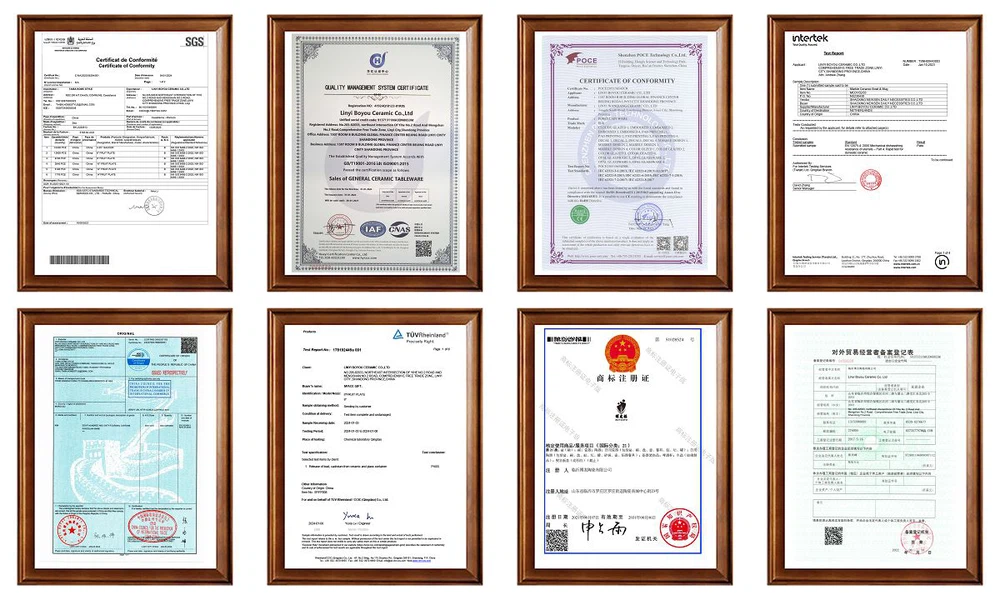
Certifications
Our Factory

Frequently Asked Questions
We're professional ceramic dinnerware manufacturers in China, specialized in providing high quality products and service. We warmly welcome you to wholesale ceramic dinnerware made in China here from our factory. For price consultation, contact us.
glazed ceramic dinnerware, dinnerware set, dinner set ceramic