


Why Choose us
Linyi Boyou Ceramics Co., Ltd. was established in 2017 and has gone through seven years. It is based in Luozhuang, Linyi, China, a famous ceramic production base, and has expanded from an initial team of 2 people to a team of 30 people now. We specialize in producing Ceramic Coffee Bowl with Lid, Gold Line Bowl Set, Noodle Bowl Deep, New Bone China Bowl, Porcelain Soup Bowl, Ceramic Decal Bowl, Ceramic Embossed Bowl, Marb Bowl with Gold Rim, and other Bowl.
Products Sell Well
Our company's products are widely exported to countries in Europe, Africa, the Middle East, Southeast Asia and South America, and have been widely praised.
Real Factory
We have 9000 square meters' modern standard plants, two mechanical production line, more than 600 staffs, our daily output reaches 160 thousand, and our production value could sum up to 120 million annually.
OEM & ODM Available
We support the customized logo, size, color, according to your requirements.
Rich Experience
Our manufacturing techniques, including freehand line, decal, pad printing, glazing, embossing process are quite mature.


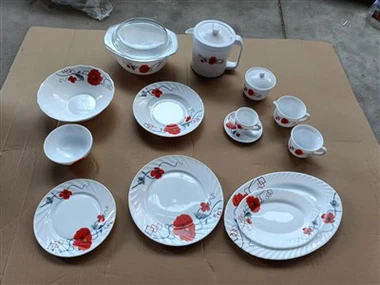


What is Opal Glassware
Opalware is toughened glass with a distinct pristine white colour. Using German technology, opalware is made from opal glass using a thermal process that increases the resistance of the material to be scratch and chip resistant, and nearly three times more robust. If you want to know the specifications and prices of Opal Glassware, please contact us!
Advantage of Opal Glassware
Non-toxic and lead-free
When it comes to choosing the right opalware dinner set for your kitchen, safety should always be a top priority.
With Opalware, you don't have to worry about any toxins or lead getting into your food. Crockery is made from high-grade materials that are non-toxic and free of any kind of lead contamination.
With Opalware, you can be sure that your food is safe from any kind of potential contamination. And since the product is made from top-quality materials, it is very durable and chip-resistant as well.
Long-Lasting Patterns
The patterns on opalware will not fade or wear off, even after repeated use in the dishwasher. This means that your opalware will look as good as new for a long time.
Bone Ash Free
Opalware is 100% vegetarian as it is completely bone ash free, unlike bone china. This makes it an ethical choice for those who prefer not to use products that contain animal by-products.
Food Safe: Opalware is 100% food safe and will not leach any chemicals into your food. This means that it is a safe choice for you and your family.
Microwave Safe
Opalware is designed to be used in all three of these kitchen appliances. The high-quality material is safe to be heated and can withstand temperatures up to 240 degrees Celsius, making it suitable for oven use.
Not only that but this crockery can also be used in the microwave and dishwasher, making it a convenient option when preparing meals. Our material is so durable that it won't chip or break after being exposed to extreme temperatures.
Additionally, the dinner set opalware is scratch-resistant and easy to clean, so you don't have to worry about any discoloration. With all these features, it's clear why Opalware is one of the best choices for your kitchen.
Durability
Opal glass dinnerware sets from GARBO are highly durable and resistant to chipping and breaking. Unlike traditional porcelain and ceramic dinnerware, which can easily crack or chip, opal glass is stronger and less prone to damage. This makes it an excellent choice for everyday use, as well as for special occasions where you want to impress your guests with elegant and durable dinnerware.
Scratch-resistant
Opal glass dinner sets from GARBO are also highly scratch-resistant, which means they will maintain their appearance for longer. Unlike porcelain and ceramic dinnerware, which can get scratched over time with regular use, opal glass is less prone to scratches. This makes it ideal for households with children or pets, where dinnerware can easily get damaged.
Heat-resistant
Another advantage of opal glass dinnerware sets from GARBO is that they are heat-resistant. This means that you can use them to serve hot food or drinks without worrying about the dinnerware cracking or getting damaged. Opal glass can withstand high temperatures, making it ideal for use in the microwave or oven.
Lightweight
Opal glass dinner sets from GARBO are also lightweight, making them easy to handle and stack. Unlike porcelain and ceramic dinnerware, which can be heavy and difficult to handle, opal glass is lightweight and easy to stack, store, and transport. This makes it ideal for households with limited storage space or for those who like to entertain guests frequently.
Elegant Appearance
Opal glass dinnerware sets from GARBO have an elegant appearance that can add a touch of sophistication to any dining table. The glass has a translucent quality that gives it a unique, pearl-like appearance, which makes it ideal for formal occasions. The dinner sets are available in a variety of designs and colors, allowing you to choose the one that suits your style and preferences.
Easy to Clean
Opal glass dinnerware sets from GARBO are easy to clean and maintain. They are dishwasher safe, and you can also hand wash them with mild soap and water. Unlike porcelain and ceramic dinnerware, which can be difficult to clean and maintain, opal glass is easy to care for and will last for a long time with proper care.
How to Evaluate an Opal Glassware
Opal hues can range across the spectrum. An opal might display a single color, two or three colors, or all the colors of the rainbow. Opal displays background color in addition to play-of-color. Background color-also called bodycolor-is caused by the suspension of tiny impurities within opal's silica spheres.
Opals are often divided into types based on background color. Even though there are many different categories for opals, here are the main five types:
Black Opal: All other quality factors being equal, many buyers favor the dark background color of black opal. This is partly because play-of-color tends to stand out attractively against a dark background. The contrast of play-of-color to bodycolor makes black opals very popular. Additionally, black opals are considered to be the rarest (white opals are more common).
White Opal: An opal with a translucent to opaque white and other light color backgrounds (bodycolor) with play-of-color is called white opal.
Fire Opal: Fire opal is transparent to translucent with a bodycolor that is usually yellow, orange or red. This material, which might show play-of-color, is also known in the trade as "Mexican opal" or "Mexican fire opal".
Boulder Opal: Boulder opal is translucent to opaque opal with play-of-color within a host rock. Thin layers of opal exist within the host rock (called matrix). The opal is cut with the matrix attached and is part of the finished gem.
Crystal and Water Opal: Crystal opal is transparent to semitransparent with a clear background. This type of opal can show excellent play-of-color. Water opal might or might not display play-of-color. If it does show play-of-color, it is faint and covers only small portions of the gem.
Play-of-color might be the most spectacular aspect of an opal's appearance. No matter the color or combination of colors, play-of-color must be vivid to command a high rating. In other words, opal lovers prize bright play-of-color over faint play-of-color.
Secondary in importance to play-of-color's strength is its range. If an opal's play-of-color is not just bright, but also ranges across the entire spectrum, it's very rare and valuable. Not every precious opal, however, sparkles with every color of the rainbow. In some, the play-of-color consists of just one main color and two or more secondary colors.
Desirable play-of-color is further broken down by the colors themselves. Traditionally, red is considered the best prominent color, orange the next most desirable, followed by green. However, favored colors can vary with fashion or personal preference.
In addition, an opal's play-of-color can change along with the viewing angle or type of light. For example, red might dominate in the same portion of an opal cabochon where blue dominates when it's viewed from a different angle.
Pattern describes the arrangement of an opal's play-of-color. Like the shapes you see in the clouds, play-of-color takes many forms.
Common terms for play-of-color patterns include:
Pinfire or pinpoint: Small, closely set patches of color
Harlequin or mosaic: Broad, angular, closely set patches of color
Flame: Sweeping reddish bands or streaks that shoot across the stone
Peacock: Mainly blue and green
In addition to the arrangement and shape of the play-of-color patches, buyers must consider extinction, or "dead spots," when evaluating pattern. A dead spot is an area of the gem in which no play-of-color appears and only background color is visible. Dead spots detract from opal value, especially if there are several of them.
With an opal, clarity is its degree of transparency and freedom from inclusions. An opal's clarity can range all the way from completely transparent to opaque. Experts prize different levels of clarity for different opal types. For example, in crystal opal, experts admire transparency, while in black opal they prefer an opaque background. Each provides the best background for displaying play-of-color in its individual opal type. A cloudy or milky background color lowers the value of any opal. It makes the gem less attractive, and it can sometimes signal a lack of stability.
There are various types of opal clarity characteristics that affect value. Opals, like other gems, can have fractures, or pits and other surface blemishes. An opal might also contain fragments of its host rock, called matrix. Matrix in a polished opal is usually-but not always-detrimental to its appearance and value. It depends on the type of opal.
If an opal loses moisture, it can lead to crazing: A fine network of cracks that resembles a spider's web. The moisture loss can be caused by heat or excessive dryness, or by exposure to bright light or direct sunlight. Crazing can be prevented by never displaying opals in places- such as window displays-where they're exposed to these conditions.

Tips to Keep Opal Glassware Looking New
Are you looking for glassware that is both beautiful and functional? Look no further than opalware! Made of toughened opal glass, opalware is extra strong and long-lasting, making it perfect for everyday use. It's also chip and scratch-resistant for carefree durability, and the patterns won't fade or wear off, even after repeated use in the dishwasher. But the benefits of opalware don't end there.
One of the best things about opalware is how easy it is to care for. Unlike other materials, it does not absorb stains or odours, making it extremely hygienic and easy to clean. And if you're worried about cleaning up after a big meal, don't be! Larah opalware is both dishwasher and microwave safe, making it a convenient choice for busy households.
In addition, opalware is 100% vegetarian, as it is completely bone ash-free, unlike bone china. This makes it an ideal choice for those who are environmentally conscious or have dietary restrictions. Plus, opalware is 100% food safe and will not leach any chemicals into your food, ensuring that your meals are always healthy and delicious.
When it comes to cleaning opal glassware, you want to avoid using anything abrasive or harsh. Abrasive materials can scratch the surface of your opalware, leaving it looking dull and worn out. So, always make sure to handle your opalware with gentle hands.
When washing your opalware, avoid using hot water. Sudden temperature changes can cause opalware to crack, so always start with lukewarm water and gradually increase the temperature as needed. Also, avoid soaking your opalware for extended periods. Instead, wash it immediately after use to prevent any stains or discolouration from setting in.
If you've noticed that your opalware has lost its lustre and appears cloudy, don't worry, there's an easy fix! Simply mix equal parts of vinegar and water and soak your opalware for a few minutes. Then, rinse it with lukewarm water and dry it off with a soft cloth. Voila! Your opalware should now be looking as good as new.
Another issue that can arise with opalware is staining. If you notice any stubborn stains on your opalware, try using baking soda and water to create a paste. Apply the paste to the stained area and let it sit for a few minutes before rinsing it off with lukewarm water. This method should remove any stubborn stains without damaging your opalware.
Lastly, storing your opalware properly is crucial to ensuring its longevity. Always make sure to store your opalware in a dry, cool place away from direct sunlight. Avoid stacking your opalware, as it can cause chipping and scratching. Instead, store it in a single layer with a soft cloth in between each piece.

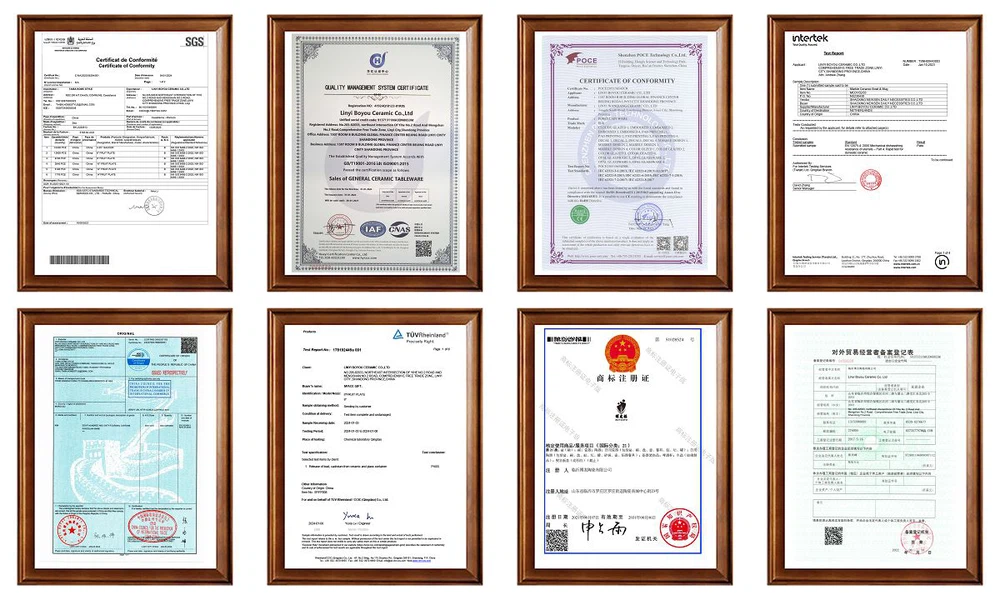
Certifications
Our Factory

Frequently Asked Questions
We're professional opal glassware manufacturers in China, specialized in providing high quality products and service. We warmly welcome you to wholesale opal glassware made in China here from our factory. For price consultation, contact us.
Opal Glass Plate, Ceramic Cup and Saucer, Porcelain White Bowl