


Why Choose us
Linyi Boyou Ceramics Co., Ltd. was established in 2017 and has gone through seven years. It is based in Luozhuang, Linyi, China, a famous ceramic production base, and has expanded from an initial team of 2 people to a team of 30 people now. We specialize in producing Ceramic Coffee Bowl with Lid, Gold Line Bowl Set, Noodle Bowl Deep, New Bone China Bowl, Porcelain Soup Bowl, Ceramic Decal Bowl, Ceramic Embossed Bowl, Marb Bowl with Gold Rim, and other Bowl.
Products Sell Well
Our company's products are widely exported to countries in Europe, Africa, the Middle East, Southeast Asia and South America, and have been widely praised.
Real Factory
We have 9000 square meters' modern standard plants, two mechanical production line, more than 600 staffs, our daily output reaches 160 thousand, and our production value could sum up to 120 million annually.
OEM & ODM Available
We support the customized logo, size, color, according to your requirements.
Rich Experience
Our manufacturing techniques, including freehand line, decal, pad printing, glazing, embossing process are quite mature.




What is Ceramic Plate
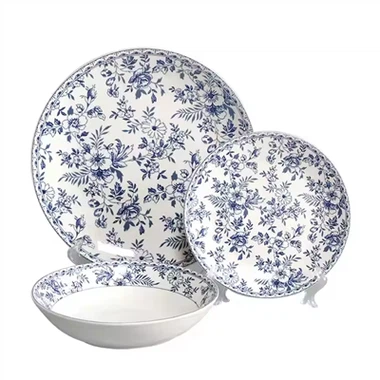
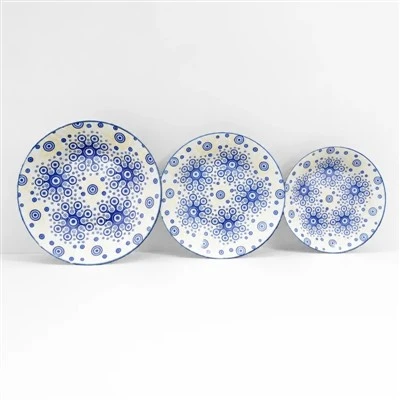
Ceramic dinner plates are made from a mixture of clay, water, and other minerals. The clay is shaped into the desired plate shape and then dried. After that, the plate is fired in a kiln at a temperature of about 1,000 to 1,200 degrees Celsius. If you want to know the specifications and prices of Plate, please contact us!
Advantages of Ceramic Plate
Wide Selection
The ceramic category encompasses materials like porcelain, terra cotta, glazed earthenware, and bone china. There's a style and material of artisan dinnerware for every occasion, from your simplest Tuesday-night dinner to the fanciest of Sunday brunches.
Heat-Safe
Because ceramic tableware is fired in a kiln, you know it can hold up to some serious wear and tear from cooking and serving hot food. Porcelain, for instance, allows for even distribution of heat throughout your dish without shattering from the high temperature.
Non-Porous
Unlike dishes made of plastic, ceramic dinnerware is non-porous, meaning it doesn't absorb chemicals from the cleaning process or food particles from serving. When you eat food that's been cooked and served in ceramic tableware, you know you're not ingesting anything harmful.
Highly Versatile
Ceramic dishes and tableware can be used indoors or outdoors, for hot or cold foods, and in a wide variety of settings. A single set of ceramic tableware from Sugarboo will serve you well for years of parties, buffets, and family dinners.
Easy to Clean
The smooth, glazed surface of your ceramic tableware makes it remarkably easy to clean. Because they're not porous, ceramic items do not get sticky the same way other materials do. All it takes is a quick wash with soap and water to get your ceramic dishes sparkling clean-no elbow grease required!
Are you ready to ditch your old, worn-out tableware for a durable new ceramic set? Let these top advantages of using ceramic tableware convince you to switch to this reliable material. Ceramic dishes have been used to cook and serve food for thousands of years; see why it's so popular by picking up some ceramic dinnerware from Sugarboo.

Type of Plate
Dinner Plate
Dinner plate is a type of plate used for main courses. The average dinner plate measures 11 or 12 inches across. This plate is the most used plate during the entire meal and it usually comes out after the salad, it is the plate resting just above the charger. Many choose to use the same plates for both lunch and dinner.
Dessert Plate
Dessert plates are usually used at formal and informal banquets. Dessert plate is usually called the luncheon plate by craftsmen. The function of this plate is quite diverse. You can use it for snacks, appetizers, and desserts. This plate is only about 18 cm in diameter. Usually often used also at parties, weddings, and others.
Bread and Butter Plate
BnB stands for bread and butter. BnB plate, is a plate used to put bread and butter. This plate is also called a quarter plate or side plate, because it is usually placed next to the fork. BnB plate is round like a plate in general. The difference is that it has a small size, which is about 15 cm in diameter.
Soup Plate/Bowl
Soup plates have a different shape than other types of dishes. Because the type of plate is used for containing watery food like soup. The shape follows the main function as a soup container. The top of the plate has an arch like a bowl.
However, there are differences between types of soup plates for formal meals and informal meals. For formal dinners, the soup plate is usually shorter in height.
Salad Bowl
This plate is usually used specifically for serving salads. Salad plate itself has a round shape with two types of different sizes. The first type of large size of about 22 cm, and the second type of small size of about 20 cm.
When faced with various types of plates, you do not have to worry in being confused about the type of plate for salads and ordinary dishes as the salad plate has a larger size than the type of bread and butter plate.
Appetizer Plate
Appetizer plate is a type of plate that is available in sizes that are quite diversed. The size starts from 17 cm. The characteristics of this plate usually have a curved tip but without indentation. This plate is almost similar to bread and butter plate, it is just slightly bigger than the BnB plate.

Hand Painting
Hand painting is the most common and handy way to personalize your dinner plates. However, it wouldn't be a great idea if you were not good at art.
But here is a tip for you:
If you think you want to hand-paint your dinner plates and are not confident about your strokes, you can use different stencils available in the market to paint your dinner set.
So how does the hand-painting work?
You're good to go if you have food-safe markers or non-toxic specialty paints for porcelain or Glass.
What else you will need is your dinner set plate. The non-toxic colors will stay on plates for quite a while. They might not be dishwasher safe, but you can save the color for longer by hand-washing the painted dishes. And if you want to paint your glass plates, you can paint the bottom surface so that the colors will never come in contact with the food.
Once you have finished painting your plates, bake them at 375 degrees for 45 minutes. Let the plates cool, and you're good to go!
Decoupage Your Dinner Set Plates With Your Taste
Decoupage is yet another decorative technique you can use for your porcelain, ceramic, or glass dinner plate set. Glass is usually the most popular material for decoupage techniques. Still, porcelain plates can also be a good medium for transparent decoupage paper, napkins, tissue paper, etc.
So how does it work?
Decoupage is a relatively inexpensive and quick technique to add your personal touch to the designs. You can use the decoupage tissue papers of different designs and prints. All you have to do is clean the surface of your dinner plates. It is better if you already have white plates. In another case, you would need to apply a coat of white non-toxic paint, so the decoupage can be visible.
The next step is the application of the decoupage glue on the top surface in the case of porcelain plates. Modpodge is the most popular glue for this purpose. After applying the glue to the plate, carefully place the tissue on the plate. You will only need the first layer of decoupage tissue with print on it. Once the tissue is dried completely, apply the glossy glue to work as a seal to tissue paper.
Decoupage can be done with pictures, shapes, confetti, newspaper cuttings, etc. These materials are more feasible options for glass plates, where you can use the bottom surface of plates for decoupage. However, the toxic chemicals of the picture cuttings and newspaper cuttings make them unfit for the top surface, where they will come in contact with the food.
Sharpie Dinner Plates Set
Yet another creative and exciting way to decorate your dinner set plates is with sharpie markers. If you love to doodle and want a similar touch in your pottery, you will need food-safe sharpie markers and white plates to get started. You can also use stencils for cleaner designs and perfect shapes. You can also write anything on your plates if you want a minimalistic yet decorative touch to the dinnerware.
Once you complete the work with sharpie markers, let the plates bake in the oven at 350 degrees for 30 minutes straight. It will make your design semi-permanent that won't go off for a reasonable period if you wash dishes by hand. If you want to risk the DIY sharpie dinner set plates with the dishwasher, you can try it and let us know if the sharpie markers stayed!
Gold Leaf Art
Gold and silver leaf are perfect for the job if you want that glam look of your dinnerware for the upcoming dinner party. You won't need to spend thousands to get that dreamy dinner set when you can turn your plain white dinner set into luxury dinnerware. Besides, using gold or silver leaf to create your DIY dinner set plates is a food-safe, inexpensive, and easy method.
Apply the adhesive on your plates in the pattern you want and wait a minute until the adhesive dries a little bit. Now start applying the gold or silver leaf with a brush. You can also use your fingers to smoothen the plate's metal leaf to avoid bubbles. Brush off the access metal leaf and apply the sealer on the plate. Let the dishes dry, and you're good to go!
Etching Your Dinner Plates
Lastly, etching is also a useful technique to decorate your dinnerware classily. Etching your dinnerware gives it a frosted look, and the best thing about this technique is that it is food- and dishwasher-safe. However, etching is most common for glass dinnerware. You can apply etching cream on the bottom surface, which doesn't hurt the top surface. However, if you are thinking of frosting your ceramic or porcelain dinnerware, drop the idea, as the etched surface of your crockery will become home to leftover food, stains, and dirt.
How to Pick the Perfect Plate For Your Food


Size
This is the simplest, most important tip regarding plating. Professional prop stylists will almost never use a dinner plate. Nine times out of ten (unless it's a rib eye steak, or you're shooting for a commercial restaurant and adhering to their plates and serving size), we choose salad plates.
The reasoning behind this is twofold. Number one, a smaller plate both simplifies a mass of complicated ingredients, such as pasta, and allows you to get a tighter frame of your food. Secondly, because it is small, you can put less on the plate without too much negative space around the food, allowing it to look abundant.
Plate Lip
If you're shooting a bowl of soup, you'll need to raise the camera enough to see what's in there.
Simple stuff, I know, yet it comes up in class all the time. If you are shooting at a low angle, and you are using a plate with a deeper bowl/higher lip, you are losing too much of what's important about your shot.
The first thing you need to know about your set is, "What is my shooting angle?" If you have a tripod, I BEG you to use it. I swear, it will change your photography forever for the better. If you don't, decide how you want to see your shot before you put food on set, and than get a tripod. Use flat plates or low rims for lower angles, rimmed dishes or low bowls for higher angles.
Colorful Plates
So you have a purple salad plate that you're dying to use because you're tired of shooting everything on white. Cool! Or…NOT cool. It all depends on what you're shooting. If the color works with the food, and helps the food pop visually, you're good to go. Otherwise, move on. I have props I've brought to twenty shoots, and never used, because they weren't quite right. The goal is always to pull focus to the element of the shot that you want people to look at first.
Careful of Patterns
You don't get into the tabletop prop rental business without a love for beautiful dishes, and we have tons of great patterns. My advice for patterned dish ware is, a. See above. Does it distract? There's a not so fine line between a slice of cake on a beautifully patterned plate, and a mass of food on a patterned plate that looks like a rejected shot from the 1960's Jello cookbook (I know you've seen it…). Yes, you love your Grandma's dish ware, but it's not for every shot. Enough said.
Mix Your Materials
If you want to keep things interesting, don't forget metal, wood boards, parchment paper, and/or layering all of the above. The list goes on. Any surface will work, as long as it isn't so distressed that it looks like a recipe for listeria (Pet peeve. There is a point where dishes and flatware transition into 'gross' territory).
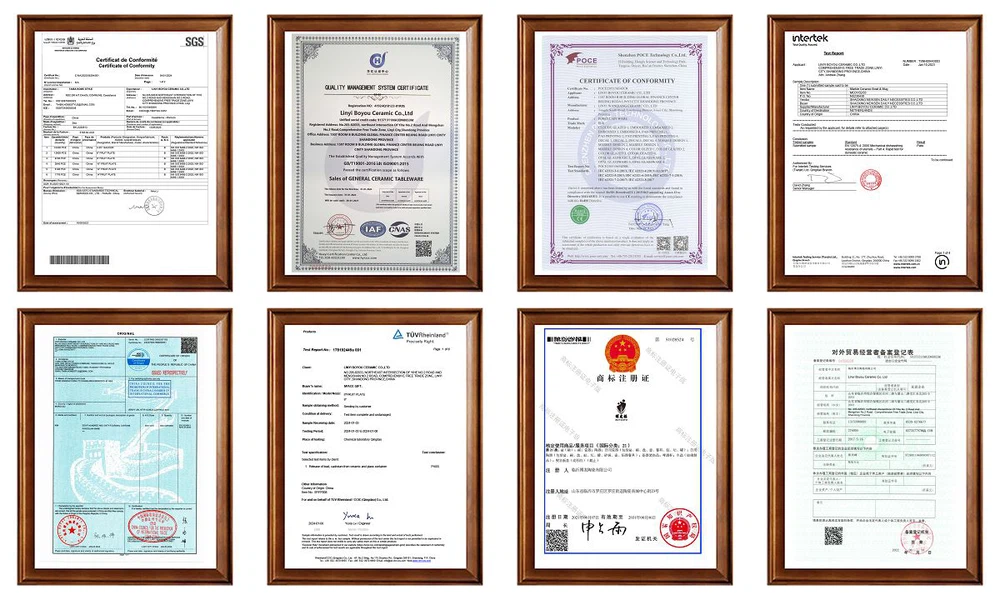
Certifications
Our Factory

Frequently Asked Questions
We're professional plate manufacturers in China, specialized in providing high quality products and service. We warmly welcome you to wholesale plate made in China here from our factory. For price consultation, contact us.
budget plate, unique plate, plate color